Predator Defense & Livestock Husbandry
A practical guide to protecting livestock, pets, and working animals through thoughtful husbandry, secure infrastructure, and layered nonlethal tools.
There is no single predator-proof solution.
The right protection plan depends on the animals being protected, the predator species present, property size, terrain, grazing system, labor, budget, and local regulations. A method that works well for a small night pen may not be practical for a large or mobile grazing operation.
The strongest plans combine several compatible tools and adapt them as conditions change. Begin with good husbandry and physical protection, then add temporary or active deterrents where they make sense.
Build protection from the ground up.
Reduce opportunity
Remove food attractants, improve visibility around animal areas, monitor vulnerable animals, and avoid leaving carcasses or feed accessible to wildlife.
Strengthen the barrier
Use secure night shelter, well-maintained fencing, gates, latches, and other physical protections suited to the animals and predator involved.
Add active deterrence
Where appropriate, add guardian animals, human presence, lights, sounds, fladry, or other tools. Rotate temporary deterrents before wildlife becomes accustomed to them.
Choose tools that fit the actual risk.
Each method below has a different purpose, cost, labor requirement, and evidence base. The evidence notes are practical summaries, not guarantees; effectiveness changes with installation, maintenance, animal behavior, predator behavior, and landscape.
Livestock Guardian Dogs
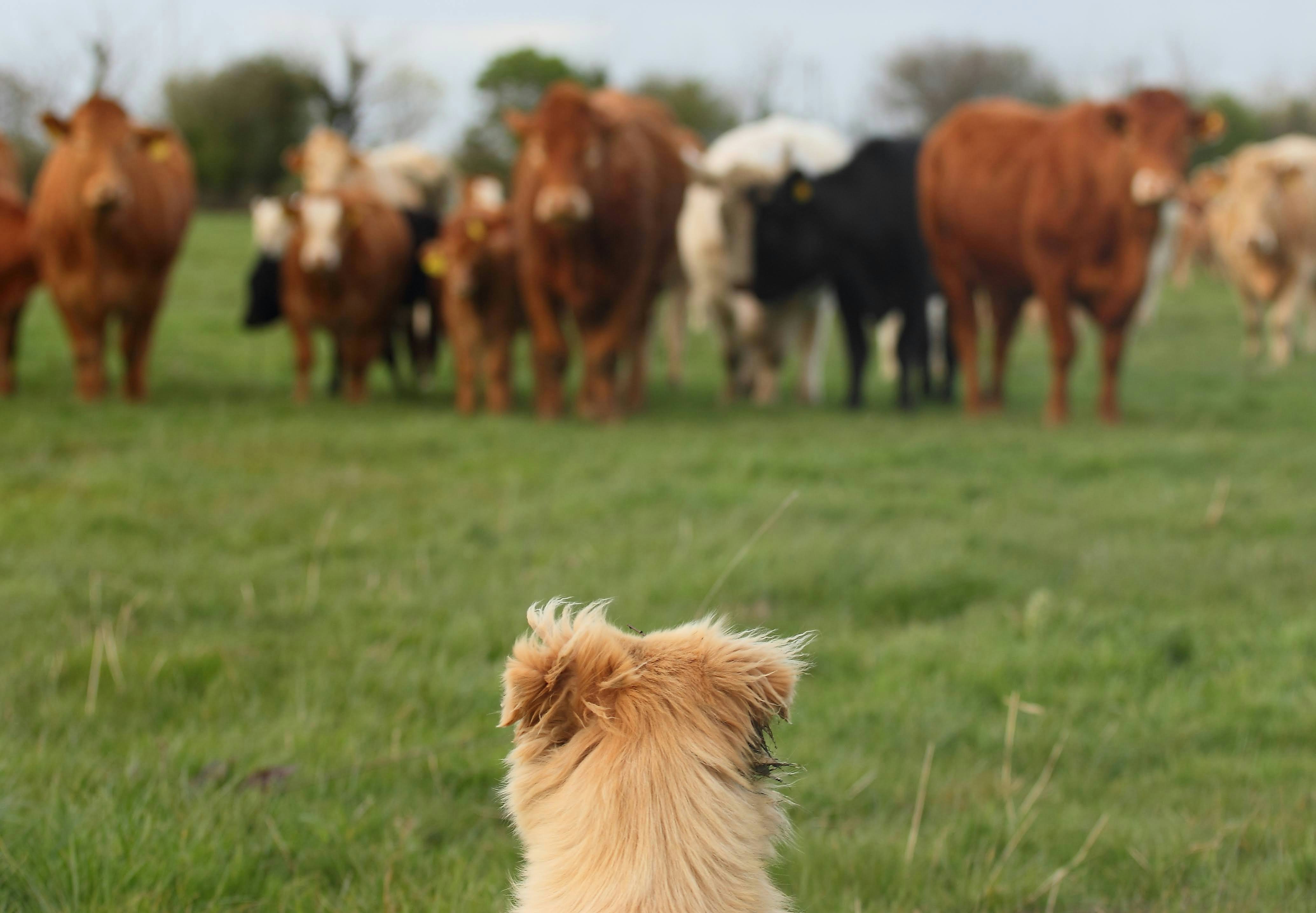
Livestock guardian dogs live with and bond to the animals they protect. Their presence, scent, barking, and defensive behavior can discourage predators and alert producers to activity near a flock or herd.
Planning and management considerations
Common guardian breeds include Great Pyrenees, Anatolian Shepherds, Maremmas, and Akbash. Breed alone does not determine success. Look at working parentage, health, temperament, prior livestock exposure, the species being guarded, and the conditions in which the dog will work.
- Puppies require careful bonding, supervision, and correction of unsafe behavior around livestock.
- Young dogs may not become reliable guardians until they mature, and some dogs will not be suitable for every operation.
- Large pastures or greater predator pressure may require more than one compatible dog.
- Plan for feed, water, shade or shelter, veterinary care, identification, containment, and interactions with neighbors, visitors, pets, and herding dogs.
Secure Night Penning
Many predators are most active from dusk through dawn. Moving vulnerable livestock and outdoor large pets into a sturdy, covered shelter at night can substantially reduce opportunity for an attack.
What makes a night shelter secure
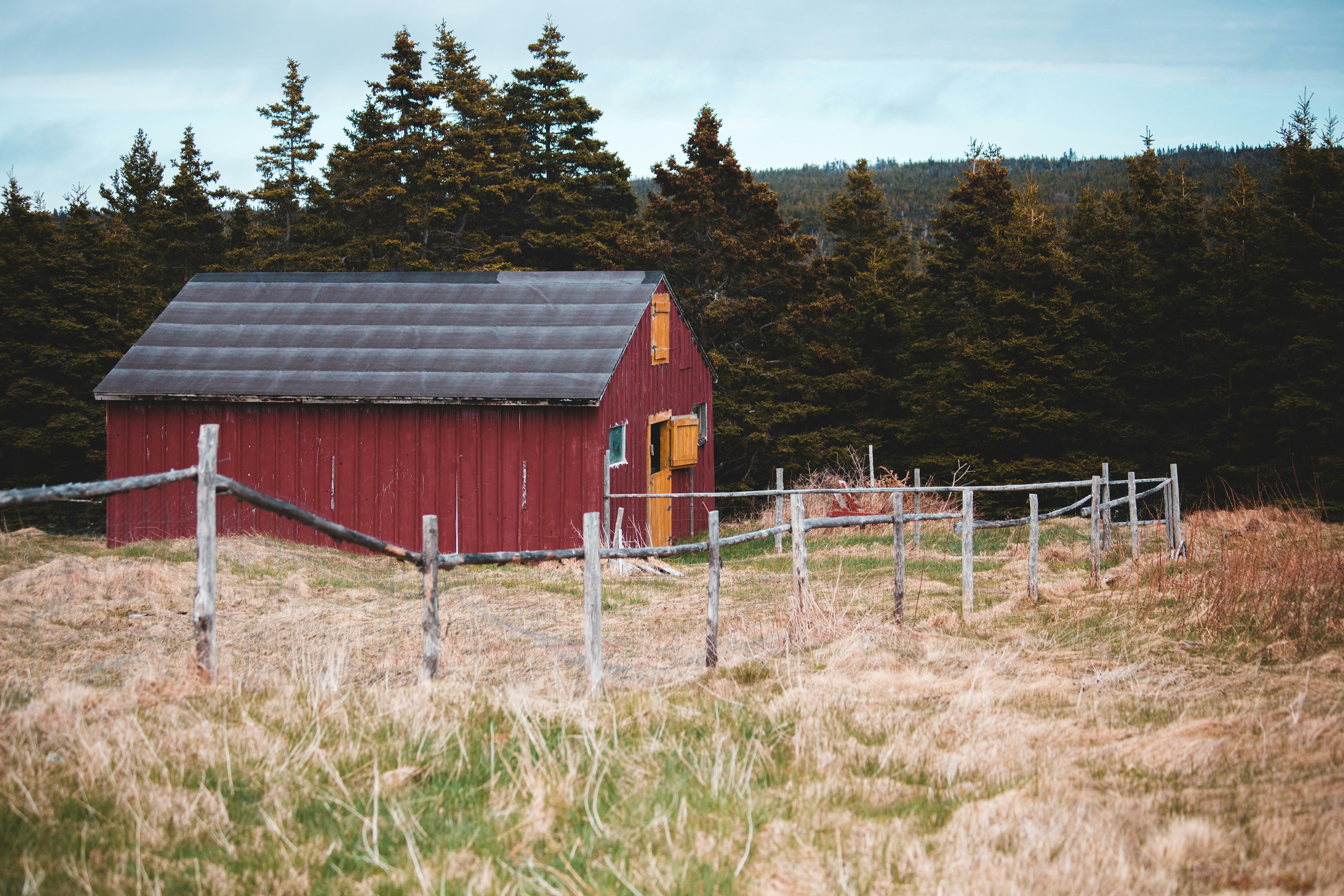
A night pen should be designed for the specific predator and livestock involved. It generally needs strong sides, a secure roof or overhead protection, well-fitted gates, predator-resistant latches, and no weak openings that an animal can climb through, push through, dig under, or enlarge.
- Inspect corners, doors, roof connections, drainage openings, and the ground line regularly.
- Keep feed and attractants out of reach, and provide adequate space, ventilation, bedding, and clean water.
- Bear-resistant construction may require much heavier materials than an enclosure intended for smaller predators.
- A poorly secured confined pen can leave animals unable to escape if a predator gets inside.
Fencing
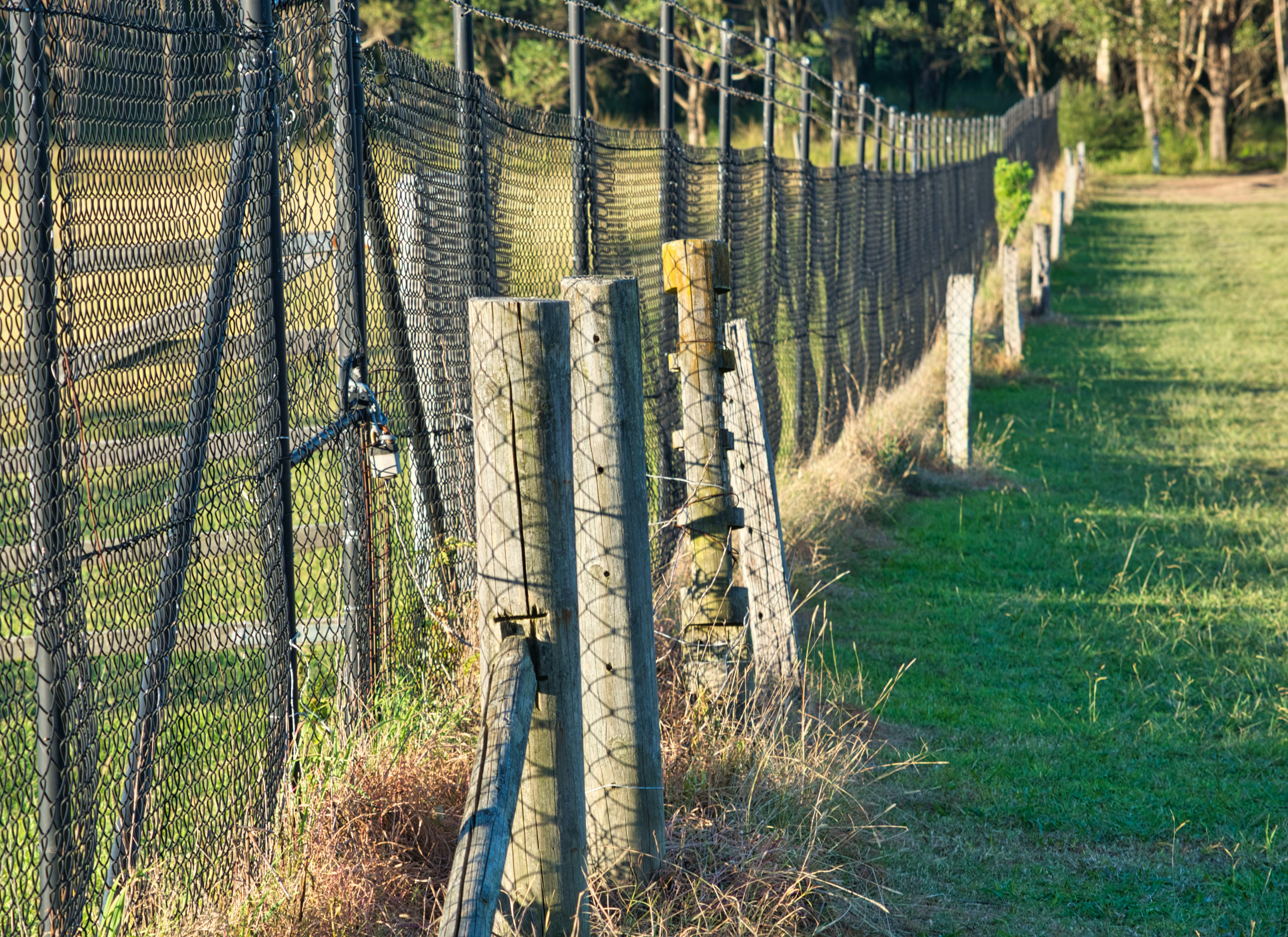
Fencing can create distance between predators and livestock, guide animal movement, and support other tools. Its performance depends on predator species, materials, height, spacing, terrain, gates, grounding, vegetation, maintenance, and installation quality.
Fence design considerations
There is no universal predator fence. Woven wire, electric strands, electric netting, offset wires, aprons, and double-fence systems serve different purposes. A livestock fence that contains animals may not exclude a determined predator.
- Address gates, dips, creek crossings, corners, fallen limbs, snow, soil erosion, and other predictable weak points.
- Electric systems require a correctly sized energizer, proper grounding, routine voltage checks, vegetation control, warning signs, and safe installation.
- Check county rules, utility conflicts, road setbacks, fire access, and other local requirements before construction.
- Ask an experienced local installer or agency specialist to evaluate the site and target predator before choosing a design.
Remove Stalking Cover & Attractants
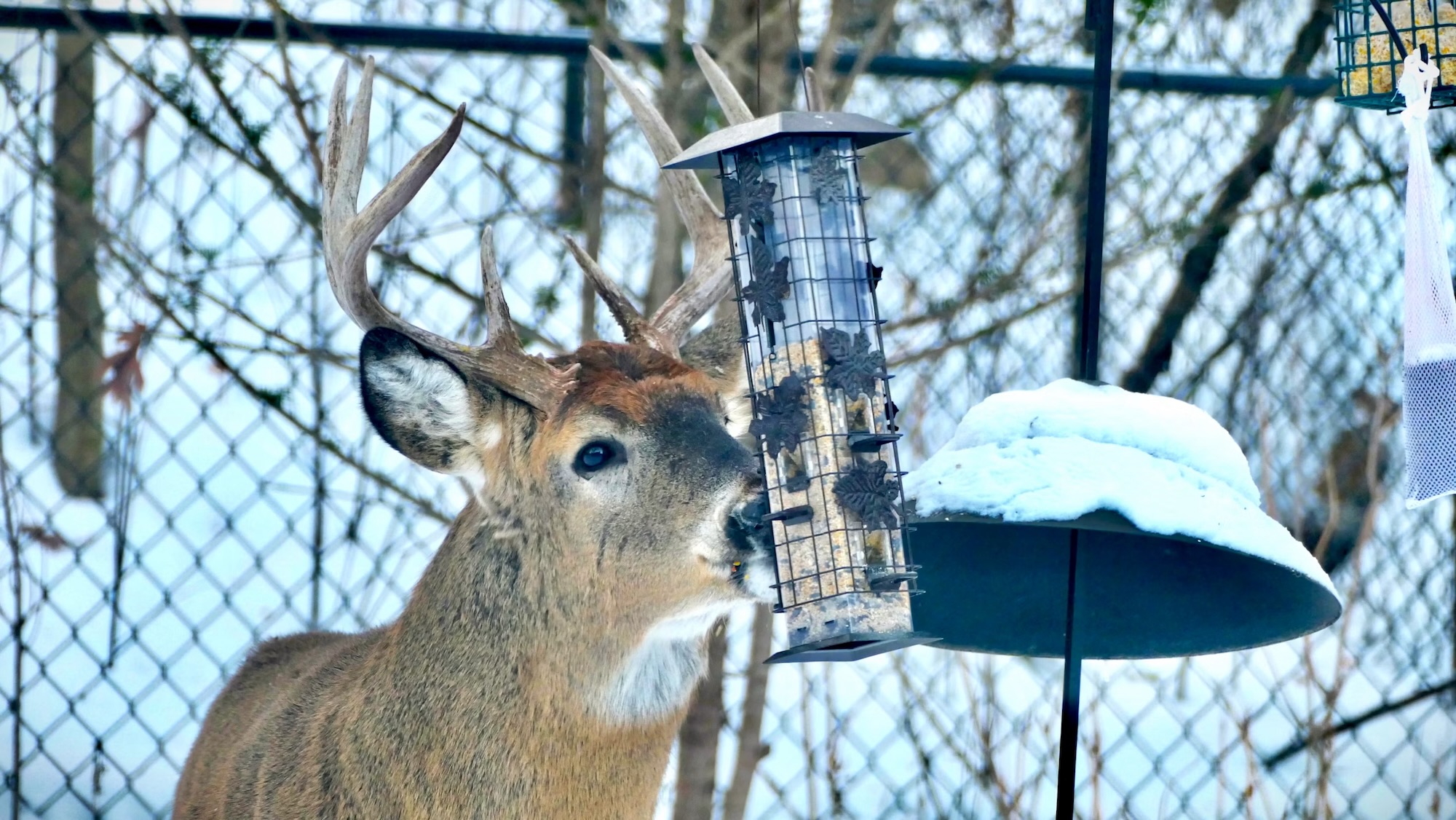
Improving sight lines around animal areas and removing reliable food rewards can make a property less attractive and reduce the chance that wildlife can approach unnoticed.
Property checklist
- Trim dense vegetation and remove hiding cover immediately around livestock pens, barns, play areas, and frequently used paths while retaining appropriate habitat elsewhere.
- Secure livestock feed, pet food, garbage, compost, fallen fruit, beehives, and other food sources in wildlife-resistant containers or structures.
- Clean spilled grain and feed promptly. Manage carcasses and afterbirth in accordance with local rules and agency guidance.
- Discourage concentrations of deer or other natural prey next to homes and animal enclosures; do not intentionally feed wildlife.
- Keep small animals indoors or in secure enclosures, especially at night.
Motion-Activated Lights
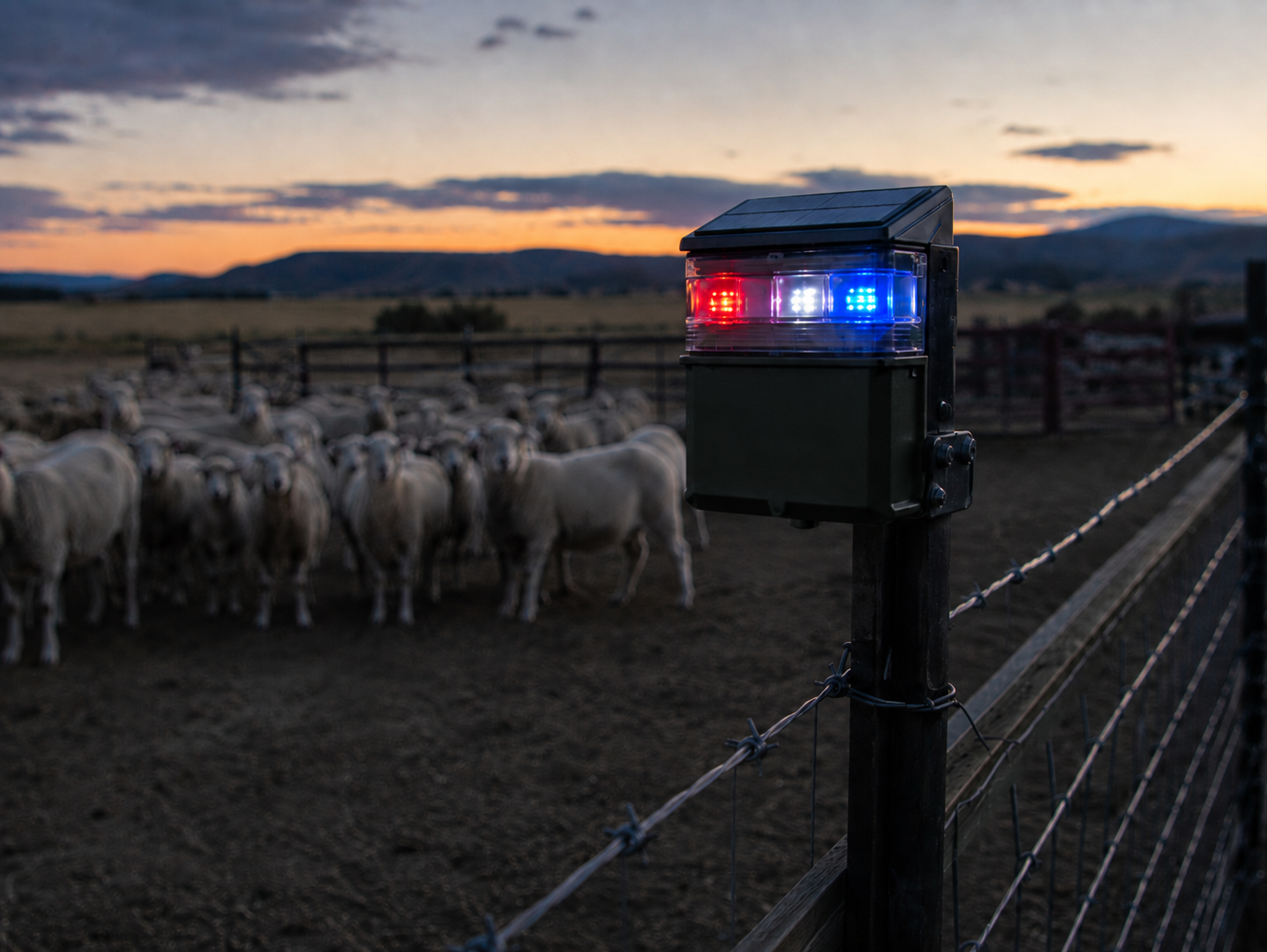
Sudden or irregular light may interrupt a predator’s approach and alert residents to activity. These devices are most useful as a supplemental, movable deterrent—not as a substitute for secure shelter or fencing.
Using lights effectively
- Place devices where they cover likely approach routes without creating glare or nuisance for neighbors and road users.
- Move or reconfigure devices periodically and combine them with a secure enclosure, human activity, or other changing cues.
- Maintain batteries, solar panels, sensors, and vegetation around the unit.
- Use cameras or direct observation to determine whether wildlife is avoiding the protected area or simply moving around the device.
Radios & Sound Deterrents
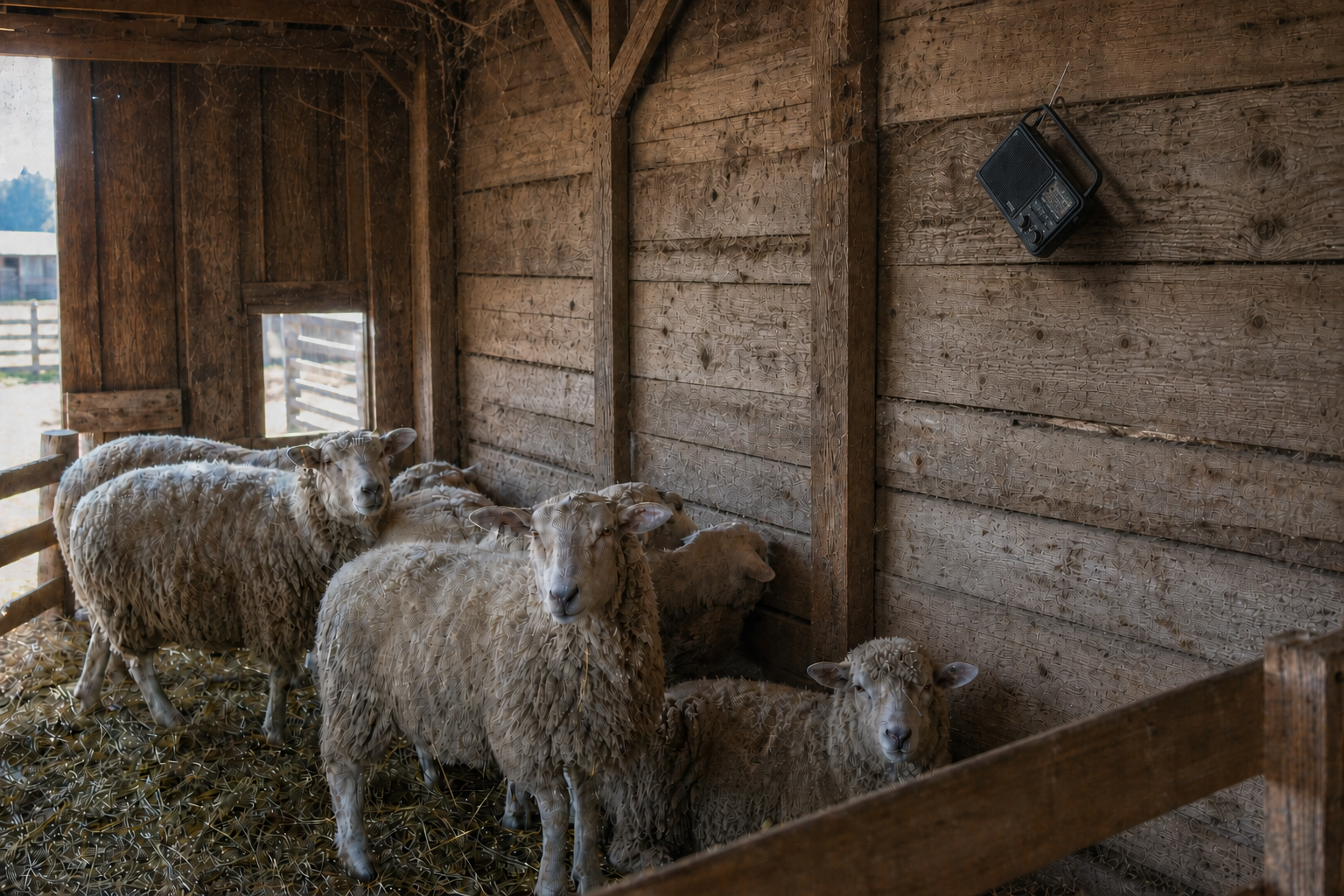
Radios, alarms, recorded voices, or motion-triggered sounds may create a temporary impression of human activity and interrupt an animal approaching livestock.
Using sound with care
- Vary timing, location, volume, and the type of sound rather than playing one continuous recording.
- Use the lowest effective volume and consider livestock stress, pets, neighbors, nighttime noise rules, and wildlife disturbance.
- Do not assume an ultrasonic product is effective simply because it is marketed for predators.
- Track activity with cameras, tracks, or direct observation and discontinue a device that is being ignored.
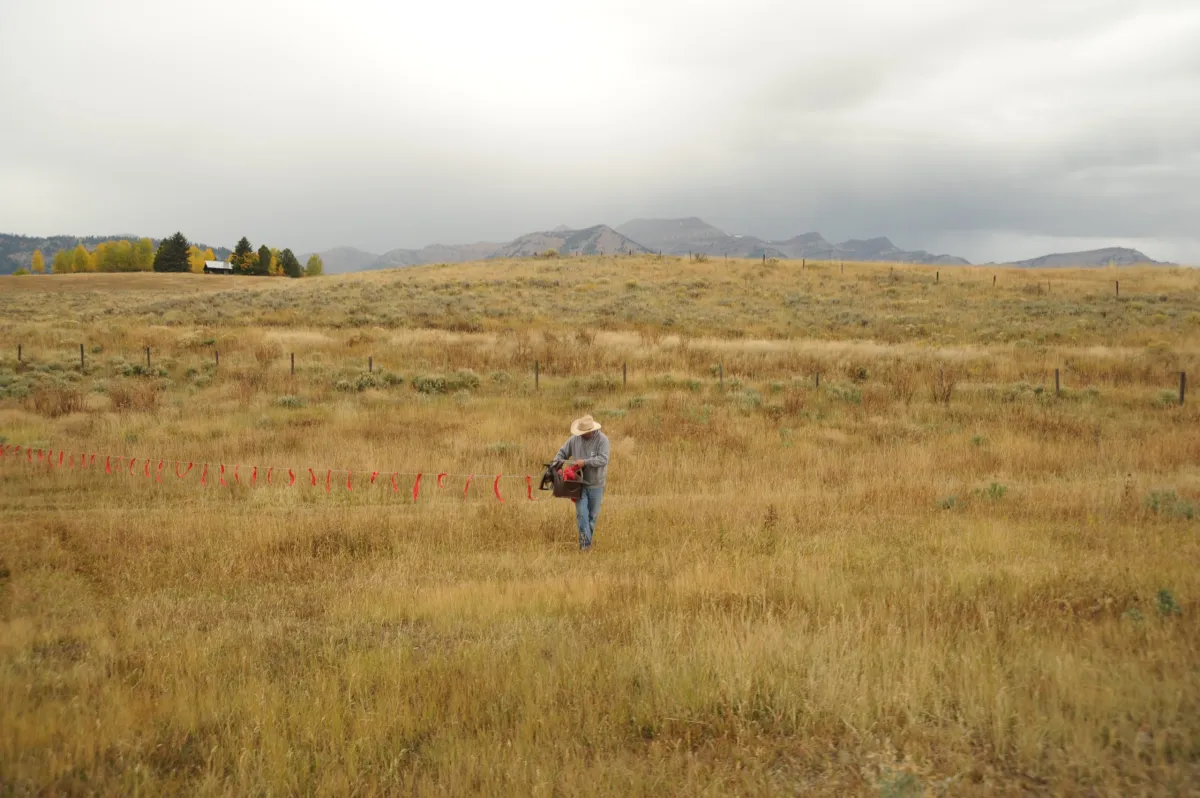
Fladry & Turbo Fladry
Fladry uses hanging flags to create an unfamiliar visual boundary. Turbo fladry adds an electrified line. These tools were developed primarily to delay wolf entry into a defined area during a limited period of elevated risk.
Installation and timing considerations
Fladry works by creating hesitation, not by providing a strong physical barrier. Installation height, flag spacing, tension, visibility, vegetation, weather, and maintenance affect performance. Turbo fladry also requires proper electrical design, grounding, signage, and safety precautions.
- Deploy it for a defined high-risk period rather than leaving it in place indefinitely.
- Inspect frequently for tangled or missing flags, sagging lines, vegetation contact, low voltage, and gaps.
- Use it with other protections such as human presence, guardian animals, secure night areas, or carcass management.
- Seek current agency guidance before using fladry for mountain lions, bears, or coyotes; its effectiveness does not transfer automatically across species.
Create a written protection plan.
A simple record of your animals, infrastructure, routines, and agency contacts makes it easier to identify weak points and respond quickly when wildlife activity changes.
When a loss or active conflict occurs
Prioritize human safety and do not disturb tracks, carcasses, bite areas, fencing, hair, scat, or other evidence more than necessary. Photograph the scene, note the date and time, separate surviving animals safely, and contact the responsible agency promptly. Procedures differ by species and county.
Important limitation
This guide is general information and does not replace site-specific wildlife, veterinary, engineering, fencing, electrical, insurance, or legal advice. Wildlife laws and response procedures can change. Always follow current agency direction and local requirements.
Research and agency guidance
View the reference list
- California Department of Fish and Wildlife. Human-Wildlife Conflicts: Mountain Lions.
- California Department of Fish and Wildlife. Investigation of Non-Lethal Techniques for Managing Mountain Lion Depredation.
- Macon, D. et al. (2018). Livestock Protection Tools for California Ranchers. UC Agriculture and Natural Resources Publication 8598.
- USDA APHIS Wildlife Services. Protecting Livestock from Predators.
- Kinka, D. et al. (2021). Livestock guardian dogs and carnivore conservation.
- van Eeden, L. M. et al. (2018). Carnivore conservation needs evidence-based livestock protection.
- Lance, N. J. et al. (2010). Biological, technical, and social aspects of applying electrified fladry for livestock protection from wolves.
- Volski, L. et al. (2021). Field evaluation of a light-based deterrent for coyote depredation.
- Wyckoff, A. C. et al. (2016). Preliminary evaluation of a double-fence system for reducing livestock depredation.
- Lucherini, M. et al. (2018). Human-carnivore coexistence and conflict-mitigation evidence.