
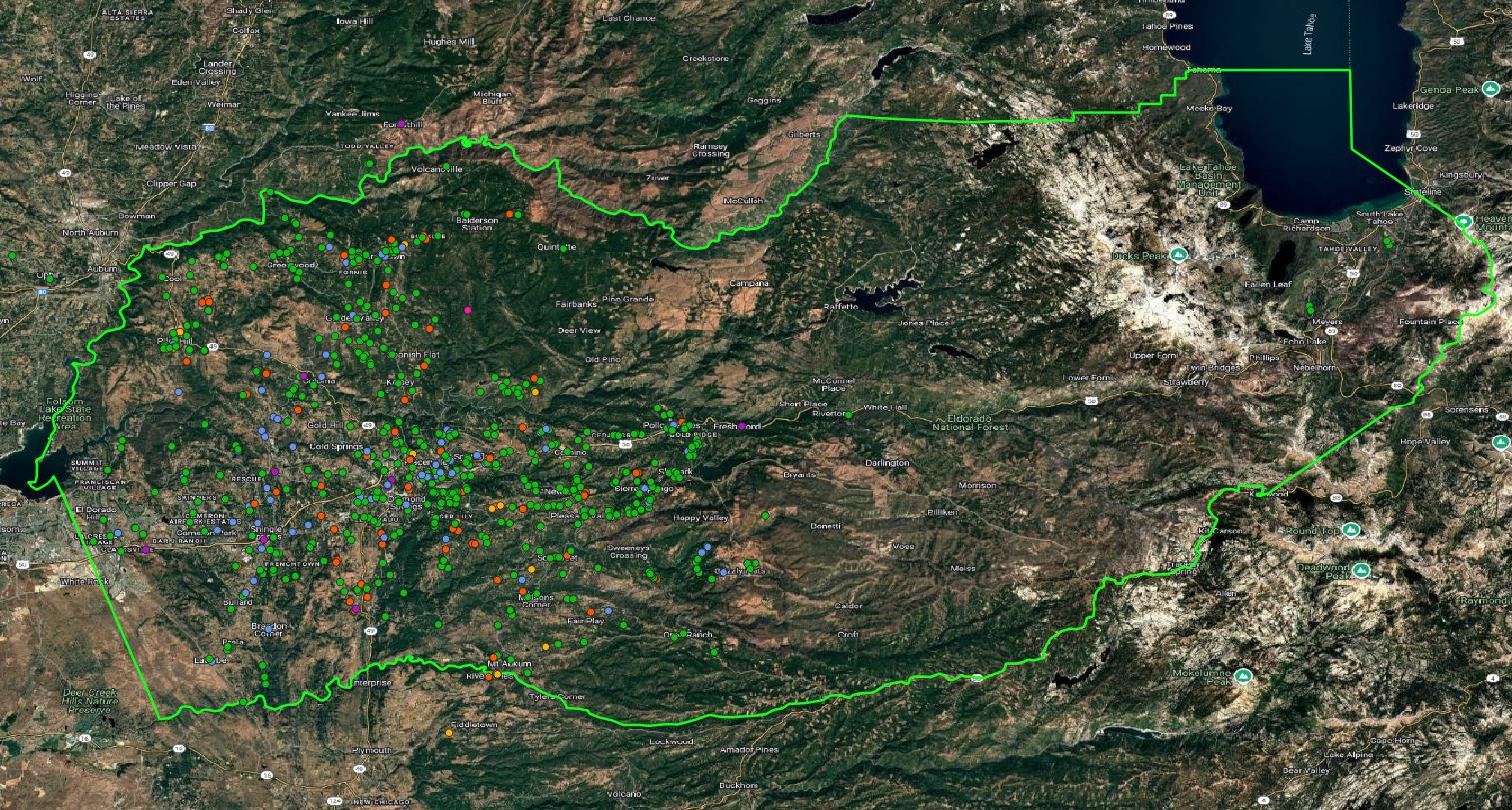
Through tracking sightings and interviewing residents about their experiences, we’re able to better understand the activity of our large carnivores within El Dorado County.
Objectives
Tracking
We track the activity of mountain lions (Puma concolor) and black bears (Ursus americanus) through eyewitness sightings, camera traps or security cameras, tracks and wildlife sign, and losses of pets or livestock throughout Placer, El Dorado, and Amador Counties. Additionally, we track historical data through one-on-one interviews with members of the public who volunteer to chat with us on a more in-depth level than just posting a sighting.
Data Collection
We collect data on not just the activity and location of lion or bear sightings, but also environmental factors and methods of wildlife defense and animal husbandry. We use land cover data from the US Geological Survey, as well as on-the-ground collection methods, to understand landscape features that could influence why that sighting happened in the first place. When it comes to livestock and pet loss, we want to understand what methods of protection were being used and if they were effective.
Understanding
Through rigorous tracking and data collection, we’re able to synthesize and analyze the information collected by citizens within Placer, El Dorado, and Amador Counties to bring insight and understanding to its residents on what they’re experiencing. There have been many studies on lions and bears throughout California, but this project aims at taking a fine needle and microscope lens to the tri-county area itself. All of our findings, as we collect them, are made available to the public who collected them.
Our Goals
It is our goal to understand what lions are doing when they interact with people and livestock within El Dorado County. By analyzing first hand sightings and accounts residents have with lions, we hope to better understand any possible behavior shift in the lion population within El Dorado County. This will help us to advocate to appropriate agencies possible management practices while giving a voice to the residents of El Dorado County. Additionally, we look at what livestock owners are using for defenses against lions, and other husbandry methods, to investigate what works and what doesn’t so that we can better inform residents who have or are looking to have livestock how they can better prepare themselves and their animals for living in lion country.
Our ultimate goal is to work with the residents of El Dorado County by using data collected here to inform them on what is going on with lions, and bears, in our county. We are working to advocate for both residents through providing results of our work on living with lions, along with advocating for mountain lions in affording them better management and protections.

Research Questions
Through data collection and monitoring, there are key questions that we would like to answer for the residents of El Dorado County.
- What protection methods are working for livestock owners living in El Dorado County? What protection methods fail and why?
- When are lions most active? When are residents most likely to see a lion and where?
- What environmental factors, such as elevation, slope, forest type, and distance to water, influence where lions are most active?
- Where bear sightings are high, do we find more conflict with lions and livestock owners?
- When residents encounter lions, what is the lion doing? What behaviors or movements does the lion exhibit?
- How have sightings for residents changed overtime?
- Where and how prevalent is wildlife feeding for animals such as deer and does this impact lion or bear sightings?
- As fires come and go in California, how does this impact mountain lion and bear movement, specifically sightings of either predator?
These are just a few questions we venture to answer with sightings data collected by the people of El Dorado County. By creating a long-term monitoring project, we aim to understand human-carnivore interactions better for residents living in one of the highest conflict counties in the State.

Working with us
Our goal here at the El Dorado County Carnivore Project is simple: we want to better protect, serve, and inform our community on carnivores. We want to use this information to help the people of El Dorado County better understand their actual risks to living with wildlife vs perceived risk while not minimizing the experiences of residents with lions. We want to better inform people on how and where mountain lions use the landscape and what methods of protection are actually effective against mountain lions and bears.
Not sure who to call?
When you call us or send us a message, we can help connect you with services in the county depending on what your needs are. Additionally, we can talk you through the activity of lions or bears in your area, things you can do to protect your animals or property, and what to do should you run into a mountain lion or one doesn’t leave the area.

Want to support this project?
Your donations help fund our grassroots research staff in their efforts to provide up to date information on mountain lion and bear sightings in El Dorado County. We are volunteers who pay out of our own pockets for equipment, programs, and time in the field. You can help support this project through a donation or purchase of equipment from our wish list. We thank the residents of El Dorado County for their continued support!